



The one secret behind happy workplaces that UK billionaires know
Updated: Aug 20, 2025
Leadership development and employee engagement: a simple, powerful method made in Finland.
Read details in the article below.

Katija Gorlinski
Owner of iEVA©
Let's go back a decade or so.
2012, UK.
Two hundred thousand companies died a slow, bureaucratic death.
But it wasn't a national pastime — bankruptcy mostly.
2022, UK also.
The economy rebounds, birthing half a million new startups, including 80 billion-dollar ventures. But there was no miracle: just some serious matchmaking behind the scenes. And not even a rain abundance — it was mentorship.
In simple terms, smart, educated people in the government conducted a large-scale study and found that the key factors behind mass bankruptcies during the crisis were decision-making mistakes made under conditions of critical information shortages, and a lack of relevant human support during stressful difficulties.

So the experts came to the counterintuitive decision to organize national large-scale programs of continuous mentoring for company leaders at all levels.
I spent nearly 18 years building expertise in supporting innovation and mentoring new colleagues, but the toxic leadership in my team became unbearable. My manager manipulated everyone—even upper management—and no amount of experience or reputation could change that. To protect my mental health, I had to switch departments. The new role isn’t as inspiring, but my new manager is respectful and easy to work with—and that makes all the difference.
Saara Komu, current expert in Fi'********* Oyj
*we respect privacy, so names of real people were changed
Here’s the punchline:
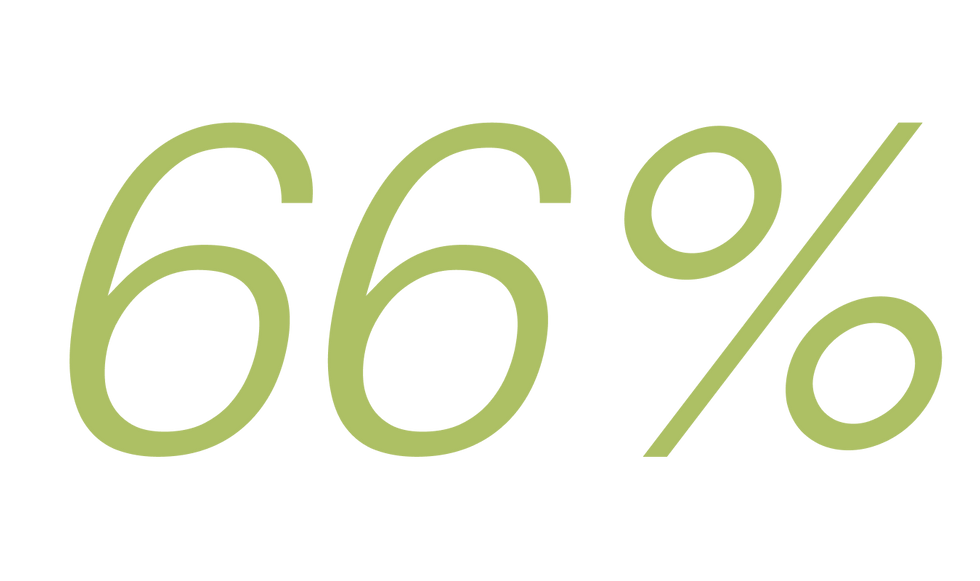
of companies survived because someone wise held their hand

say mentoring was their secret weapon — basically the business version of a life coach.
Inspiration | |
 | Founder: Anne Boden Mentorship Impact: Anne Boden credits mentorship from industry veterans and tech entrepreneurs as instrumental in navigating regulatory challenges and refining Starling Bank's business model. This guidance was pivotal in establishing Starling as a leading digital bank in the UK. |
 | Co-founder: Rishi Khosla Mentorship Impact: Rishi Khosla benefited from mentorship in both his early career and while building OakNorth. Mentors from the finance and technology sectors assisted in navigating the regulatory environment, attracting investment, and developing a robust technology platform, contributing to OakNorth's success in serving small and medium-sized enterprises. |
 | Co-founder: Kathryn Parsons Mentorship Impact: Kathryn Parsons found mentorship crucial in scaling Decoded, a tech education company. Mentors helped in developing a scalable business model, securing key partnerships, and refining product offerings, enabling Decoded's global expansion and a high-profile client list. |
In Finland, we cherish our independence like a cat loves ignoring commands. But let that independence run wild without the social leash of cooperation, and our personal or business failure odds spike to 5O% or more.
So, if you think you can sail the entrepreneurial seas solo, remember: even seasoned captains rely on their crew — or risk becoming shark bait.
I really do love Finland and hoped to grow my research work here. But after several years, it still feels tough — even a simple ‘good morning’ often goes unanswered. The emotional distance is hard on me. Sometimes I wonder if this country is truly the right fit.
Ayşe Dogan, reseacrh fellow in famous pharm company
More benefits of cooperation
Engaging in cooperative activities isn't just good for business—it's beneficial for your health. Cooperation enhances mental well-being, reduces stress levels, and can even contribute to increased longevity. Neuroscientific studies have shown that cooperative behavior activates brain regions associated with reward and empathy, reinforcing positive social interactions.
These soft and cognitive skills enhance ability to collaborate successfully:

iEVA trains participants on this skills in a simple, fast proven method with no analogues — tailored specifically to meet business and corporate needs.
I feel genuinely good when I help. But now, there's a new kind of freedom in it — I no longer sacrifice myself or expect anything in return. I just help, even more than before, without fear of being used or betrayed.
Marja Venta
Gender Differences in Cooperative Behavior
Having worked across multiple countries, I’ve seen firsthand how leaders often try to sync a ballet with a rugby scrum — a noble attempt to manage cooperation between gender-diverse experts, yet often ending in unintentional comedy.
In the process of collaboration, it’s crucial to master gender-informed behavioral tactics. It's our nature. Without this awareness, what should be a smooth duet quickly becomes a clumsy tug-of-war in mismatched tempo. Is there any sense to fight with nature laws?
Thus,
a | b |
Communication Styles: | Approach to Collaboration: |
Studies have shown that women often prioritize relational aspects in communication, while men may focus more on task-oriented interactions. | Understanding these differences can enhance team dynamics and ensure inclusive collaboration strategies. |
Take the accurate appliable instructions of male/female cooperation tactics
The Silent Epidemic: When Independence Becomes Isolation
Everyone of us understands that a relentless pursuit of independence, of personal success, often at the expense of connection. Despite the individualism has many positive benefits in our lives.
But here's the plot twist: social isolation isn't just a personal inconvenience; it's a public health crisis. Studies reveal that loneliness can be as detrimental to health as smoking 15 cigarettes a day, increasing the risk of heart disease, stroke, and even premature death.
Imagine that—our quest for autonomy leading us down a path more perilous than a pack-a-day habit.
In workplaces, the narrative unfolds with unsettling familiarity. An ambitious individual steps on colleagues to climb the corporate ladder, while others watch in silence, paralyzed by a lack of skills to intervene or support. Not everywhere of course, but I've seen it many times.
What do we have in the result? A culture where burnout thrives, and genuine collaboration is a rare phenomenon?
I used to see myself as a classic introvert—someone who needed solitude to recover from the chaos of managing teams. A year ago, if you'd told me that social interaction could actually recharge me, I would've laughed it off. But after diving into some focused soft skills training, something shifted. I started finding joy in the kind of connections I used to avoid. These days, I can genuinely relax in social settings that once left me completely drained.
Johanna Nyyssönen, Business area Lead in V**** Oyj
But here's the twist:
skills — real, human, practical — are trainable.
Not the sugary soft-skill clichés, but sharp, grounded tools of connection and reflection. The kind of skills that don’t just make you "nicer" — they make you powerful.
At iEVA, we train the full range of cooperation skills you need to boost your business outcomes and transform your workplace culture. You’ll learn how to recognize the moment power turns toxic, how to speak when silence tempts, and how to collaborate without folding your spine.
Anyone can walk into a room and shift the dynamic — toward purpose, clarity, and dignity.
Not by dominating. Not by people-pleasing. But by co-creating something saner, sharper, and more alive.
The era of lone wolves is ending.
Time to grow a powerful pack.
Join iEVA for free.
Train the skills that change everything—right now, using your access to ChatGPT.
prompt
Give me the iEVA peer-support routine for leaders from i-eva.fi/peer-support
Comments